There are many ways for a technical team to learn.
You can leave training to individual team members. You can purchase access to an on-demand platform. You can bring in an instructor for a workshop or customized course. Each option solves a different problem.
Self-study works well when one person needs to learn a narrow skill. On-demand courses provide flexibility and sacrifice depth and customization for some breadth. Live training becomes especially valuable when the problem is not just individual knowledge, but how the team works together.
Put ten Python developers on a team, and you may get ten different approaches to environments, dependency management, project structure, testing, code review, and AI-assisted development. Each approach may appear reasonable in isolation. Together, they create friction.
The right training should do more than teach another library or demonstrate a collection of features. It should help the team establish a shared vocabulary, a shared set of practices, and a more effective way to make technical decisions.
That is the problem MetaSnake training is designed to solve.
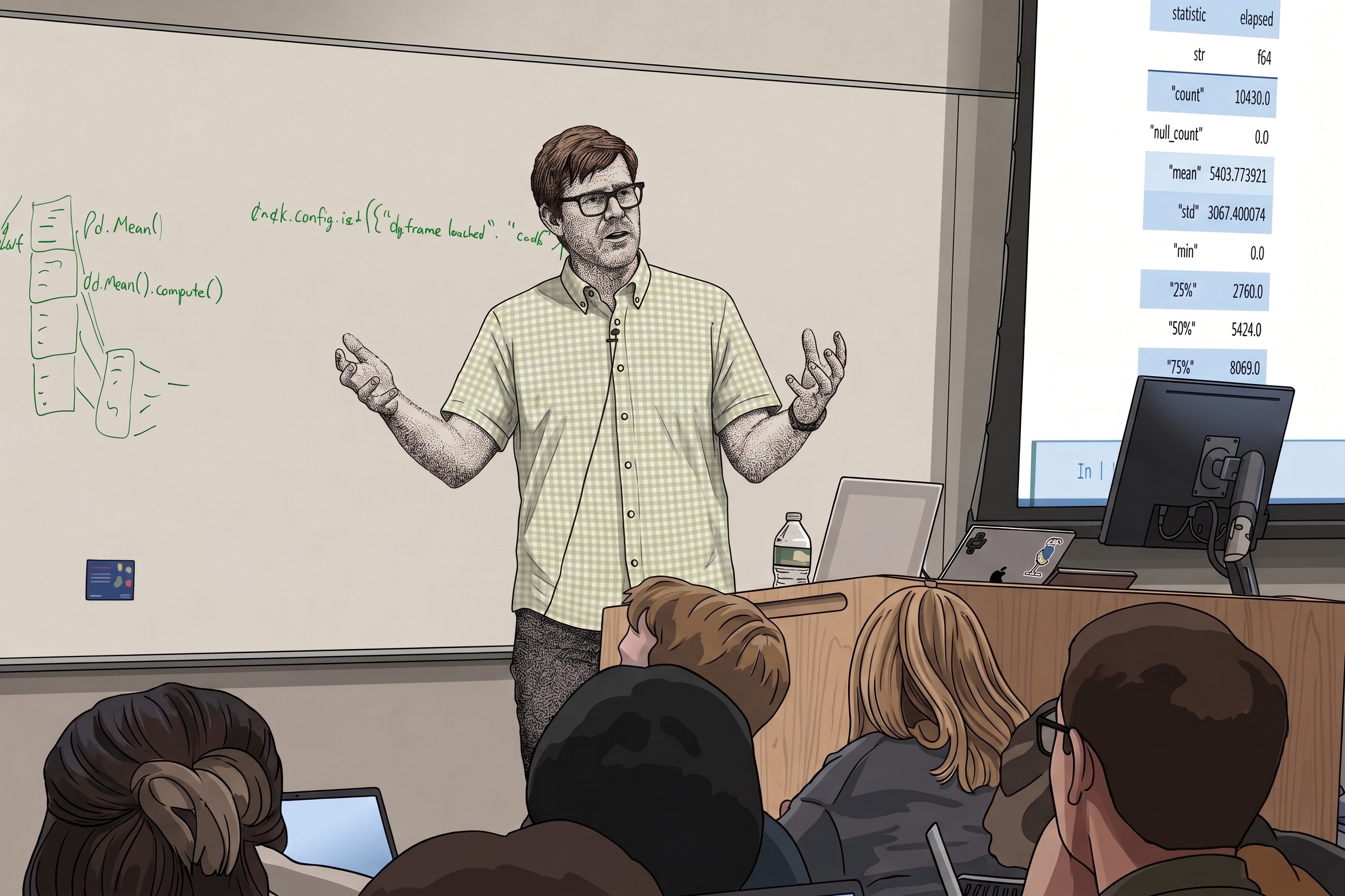
Training creates a neutral environment where the most senior and the newest team members can come together and learn to speak a common language. It is a rising tide that lifts all boats. Involving everyone in the training process creates a sense of unity and shared responsibility. Senior developers have the opportunity to compare assumptions and share implicit knowledge. This alignment is crucial for effective collaboration and maintaining code quality.
I've worked as a backend developer and data scientist and have seen the good, the bad, and the ugly of software development.
Because MetaSnake has experience across a wide range of industries and applications, we can cater our training to your specific needs. Rather than using canned examples, we can use your code and your problems to teach the principles and practices that will help your team be more effective.
Finally, perhaps the elephant in the room is AI. I've used AI for development since copying and pasting out of ChatGPT. I've trained teams that use different agents. I've used AI to write more code in the last year than I have in the last decade. The key is to know where to insert the human in the loop. I have a framework for doing that that I've taught to teams building the next generation of computers to some of the largest companies in the world.
Training should not leave participants with a folder full of slides and a few new commands. It should leave the team with stronger judgment, more consistent practices, and a workflow they can continue using after the course ends.
If your team is struggling with inconsistent Python practices, fragile data workflows, ineffective testing, or uncontrolled AI adoption, reach out. We can discuss where the friction is occurring and whether a talk, workshop, or customized course is the right way to address it.